
2026-09-04 ·
Preventing Basement Water Issues From Downspout Placement in Urban Yards
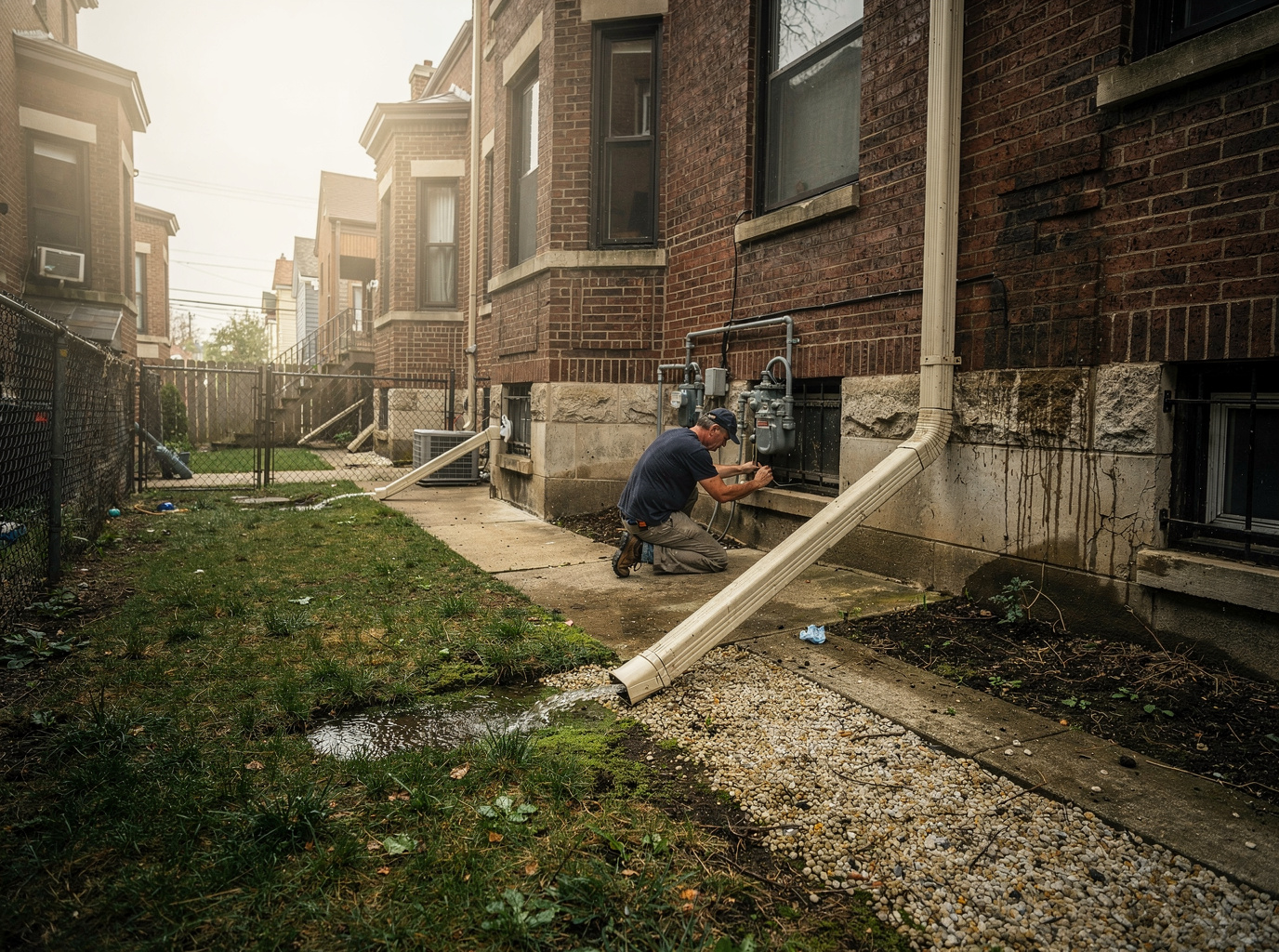
Effectively preventing basement water issues in Chicago's urban yards largely depends on extending downspouts at least 5–10 feet away from the foundation, coupled with proper grading and regular maintenance. This proactive approach is critical because Chicago's humid continental climate brings significant precipitation, from heavy spring and summer downpours to substantial winter snowmelt, all of which can quickly overwhelm inadequate drainage. In dense urban areas like Lincoln Park, Logan Square, or Wicker Park, where properties are often close-set and lot sizes are smaller, precise water management is not just a recommendation—it's a necessity to protect your home from costly water damage.
Understanding Chicago's Water Challenges and Your Home's Vulnerability
Chicago's distinct weather patterns, characterized by hot, humid summers and cold, snowy winters, mean homes here endure a wide range of moisture challenges throughout the year. The rapid melt of accumulated snow, combined with sudden, intense rainstorms, can direct thousands of gallons of water from your roof directly to your foundation if not properly managed. This is particularly true for the older housing stock prevalent in neighborhoods like Lakeview, Bridgeport, or Pilsen, where foundations may be more susceptible to moisture intrusion due due to age or settling. When water pools near the foundation, it creates hydrostatic pressure, which can force water through cracks, mortar joints, or even solid concrete, leading to damp basements, mold growth, and structural damage. The heavy clay soil common across Cook County further exacerbates this issue, as it expands when wet and contracts when dry, putting additional stress on foundation walls.
The Critical Role of Downspout Extension and Discharge
The primary defense against basement water issues begins with ensuring your downspouts direct water far enough away from your home's foundation. A minimum extension of 5–10 feet is recommended, but ideally, water should be discharged even further if your property allows. There are several effective ways to achieve this, from simple flexible corrugated pipes to more robust rigid PVC extensions, or even sophisticated underground drainage systems. When installing extensions, it's crucial to direct water towards permeable surfaces like lawns or gardens, or, where permissible, into municipal storm drains. This is especially important in tightly packed neighborhoods such as Andersonville or Rogers Park, where misdirected water can easily become a problem for a neighbor's property. Always ensure a slight downward slope, typically about 1 inch per foot, for the first few feet of the extension to facilitate efficient water flow away from the structure. For more permanent and effective solutions, consider professional assistance with your downspout installation to ensure optimal water diversion.
Grading and Landscaping: Your Foundation's Best Friends
Beyond downspout extensions, proper grading of your yard is equally vital for preventing basement water issues. Your property should have a positive grade, meaning the ground slopes away from your foundation at a rate of at least 6 inches over the first 10 feet. Many older Chicago homes, or those where soil has settled over time, often have negative grading, which inadvertently channels water directly towards the basement walls. Addressing this might involve adding soil to build up the grade or re-sloping existing landscaping. Thoughtful landscaping can also play a significant role; consider incorporating rain gardens or permeable pavers that absorb water rather than directing it. Even concrete patios or walkways, if installed without adequate slope, can create unintended pooling areas. A well-designed landscape works in harmony with your gutters and downspouts to create a comprehensive water management system.
Maintenance and Inspection: A Year-Round Necessity
Even the best downspout placement and grading can fail without consistent maintenance. Given Chicago's intense weather cycles, it's essential to perform regular inspections and cleanings, particularly before and after the cold winter months and following heavy spring and summer rains. Clogged gutters and downspouts, often due to leaves and debris from mature trees common in areas like Evanston, Oak Park, or Lincoln Park, will render any extension useless. Check downspout connections to ensure they are secure and that extensions haven't been dislodged or damaged. After significant precipitation, take a walk around your foundation to inspect for any signs of water pooling or new cracks. Proactive gutter cleaning is one of the most effective preventive measures you can take, ensuring water flows freely and is directed away from your home as intended. For a detailed guide on post-rain inspections, refer to our article on inspecting gutters after heavy spring rains.
Advanced Solutions for Challenging Urban Yards
For properties in congested urban settings like the West Loop or South Loop, or those with persistent water problems, standard downspout extensions might not be sufficient. In these cases, more advanced solutions are often necessary. Underground drainage systems, for instance, can connect directly to your downspouts and carry water much further away from the foundation, sometimes even to the street or a dedicated storm sewer, where local regulations permit. While splash blocks offer a basic level of protection, they are often inadequate for the significant water volumes experienced during Chicago's heavy downpours. Consider integrating gutter guards to minimize clogs in these systems, ensuring they remain clear and functional year-round. Additionally, rain barrels can temporarily store rainwater for later use, but they must be regularly emptied to prevent overflow during extended periods of rain, ensuring they don't become part of the problem.